

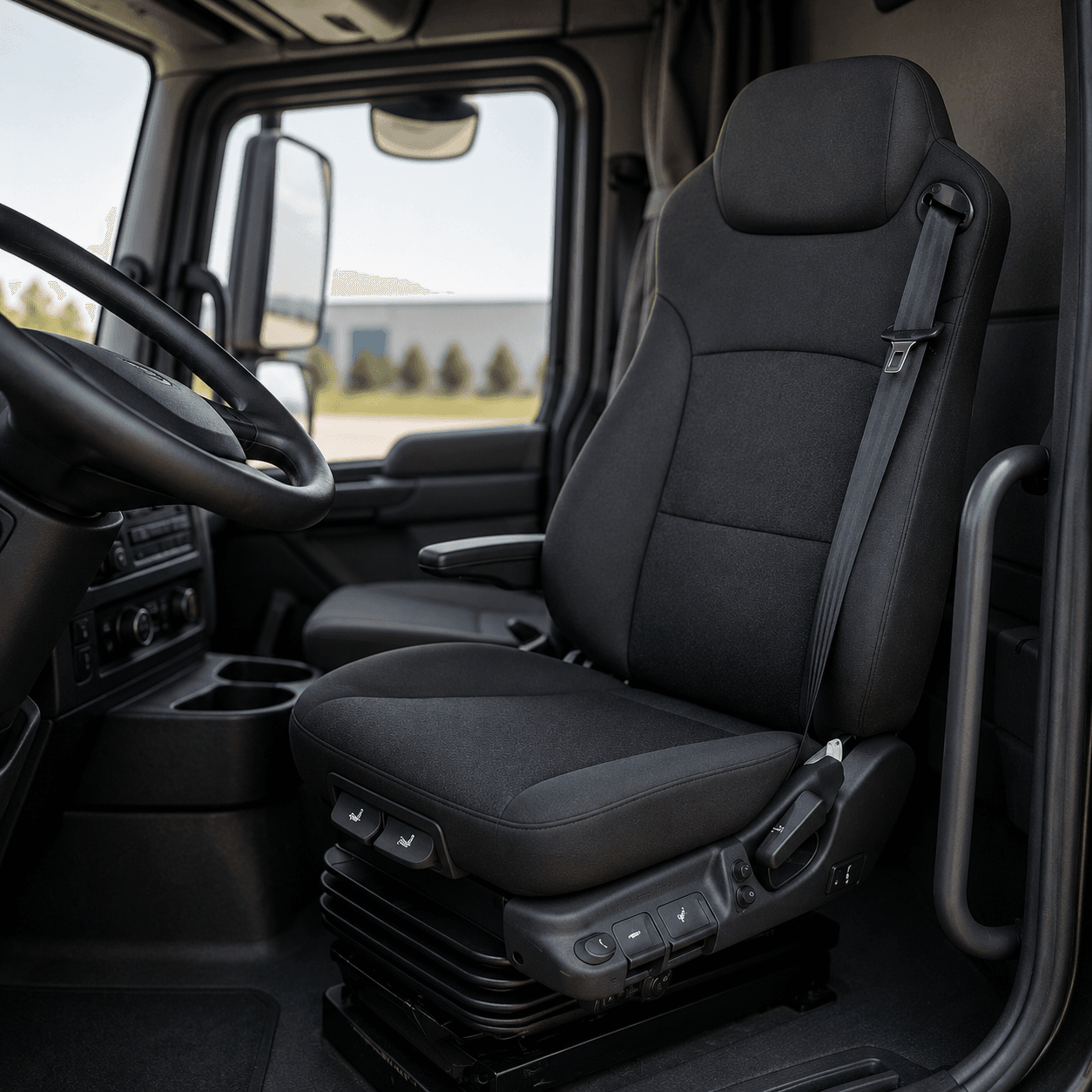
How to choose a compatible truck seat?
Choosing a compatible truck seat doesn't just mean evaluating the make or model of the vehicle. Seats intended for industrial vehicles may have differences in attachments, dimensions, suspension system and integrated equipment. Even two aesthetically similar products may therefore not be interchangeable.
Correct identification is essential to ensure proper fitment, maintain an ergonomic driving position and allow the seat to work properly during long journeys.
Before purchasing a replacement truck seat it is necessary to check the characteristics of the vehicle and compare them with the technical specifications of the product.
Why is seat compatibility important?
The driver of a truck spends many hours driving. The seat helps support posture, absorb some of the vibrations and reduce the stresses transmitted by the vehicle.
An inappropriate seat can cause:
- installation difficulties;
- incorrect driving position;
- insufficient adjustments;
- interference with the steering wheel, dashboard or cabin;
- suboptimal suspension operation;
- incompatible electrical or pneumatic connections;
- reduction in comfort.
Compatibility must be verified considering the entire system and not just the external measurements of the seat.
Check the make, model and configuration of your truck
The first step is to correctly identify the vehicle. It is appropriate to collect information such as:
- make and model;
- year or series of production;
- cab version;
- mounting side;
- original seat code;
- any OEM code;
- vehicle preparation.
The truck model alone may not be enough. Over the years, the manufacturer can in fact modify the configuration of the cabin, the guides, the supports or the electrical equipment.
When available, the code of the seat originally fitted represents one of the most useful references for identifying a compatible replacement.
Check connections, guides and dimensions
The base of the new seat must be compatible with the fixing points in the cabin. Before choosing it is therefore important to check:
- distance between holes;
- width and length of the base;
- guide configuration;
- overall height;
- space available in the cabin;
- location of controls;
- possibility of scrolling.
Height also deserves attention. An excessively high or low seat can make it difficult to reach the pedals, change visibility or prevent correct adjustment with respect to the steering wheel.
The dimensions must be taken following the manufacturer's technical indications, avoiding assessments based only on photographs.
Mechanical seat or pneumatic seat?
Aftermarket truck seats can use different suspension systems. In mechanical seats, the absorption of stress is entrusted to springs and shock absorbers. In pneumatic seats, an air-powered system is used instead.
Before choosing a pneumatic truck seat you need to check:
- presence of pneumatic power supply;
- required pressure;
- type of connection;
- available space;
- compatibility with the vehicle system.
A properly adjusted air seat can adapt the response to the driver's weight and help limit vibrations. The presence of the air system, however, does not automatically guarantee compatibility with every truck.
Check adjustments and equipment
The adjustments allow you to adapt the seat to the physical characteristics of the driver. Depending on the model they may include:
- longitudinal sliding;
- height adjustment;
- backrest inclination;
- lumbar support;
- adjustment based on weight;
- seat depth;
- armrests;
- headrest.
You must also check any electrical equipment, such as heating, ventilation, sensors or integrated controls. Voltage, connectors and wiring must be compatible with the vehicle.
The presence of the integrated belt also requires specific verification. The restraint system and its fixing points must comply with the configuration foreseen for the vehicle.
Safety, quality and approval
When choosing a compatible truck seat you shouldn't just evaluate comfort. The seat must be suitable for the application, installed correctly and compliant with the requirements.
It is important to check:
- quality of materials;
- resistance of the structure;
- suspension reliability;
- technical documentation;
- applicable conformity and approvals;
- availability of spare parts;
- instructions for assembly.
Installation should be entrusted to qualified personnel, especially in the presence of pneumatic, electrical connections or integrated restraint systems.
Way Assauto replacement truck seats
Way Assauto offers replacement seats for trucks and industrial vehicles, supporting spare parts dealers and distributors in the correct identification of applications.
To choose a compatible truck seat it is advisable to communicate the original product code and all the information available on the vehicle. The Way Assauto team can support the verification of the reference and the identification of the most suitable solution for the required configuration.
Leave a Reply