

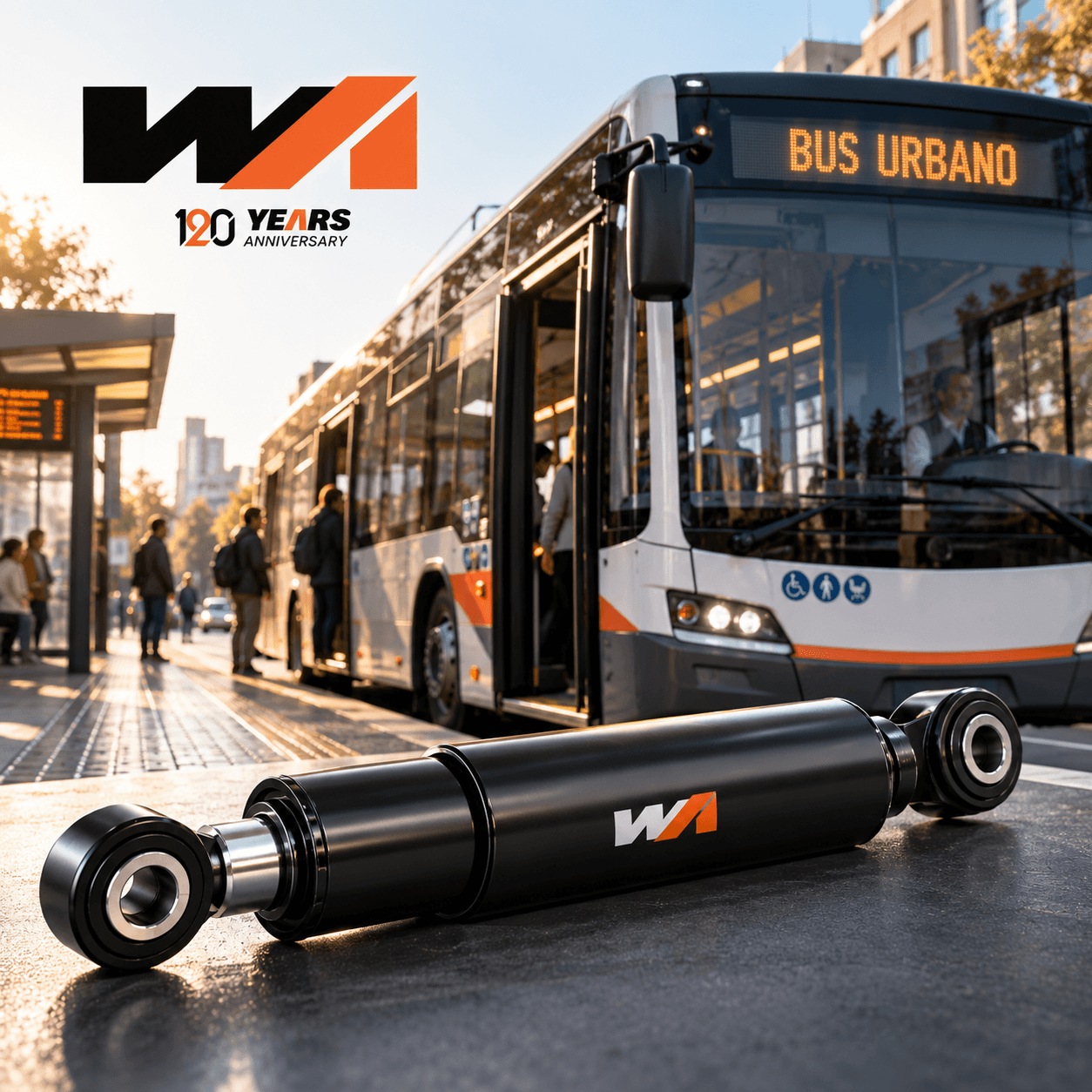
Shock absorbers for city buses: what changes in daily use?
The shock absorbers for city buses they work in an operating context characterized by frequent stops, restarts, curves, load variations and continuous irregularities in the road surface.
A bus may travel a seemingly repetitive route every day, but the conditions in which the suspension works change continuously. The number of passengers varies, traffic changes the pace of travel and bumps, manholes, joints and uneven pavements generate different stresses.
For those who manage a fleet, therefore, the point is not just to identify a worn shock absorber.
It is important to understand how the vehicle is used, program the checks correctly and identify the spare part required for the specific application.
The role of shock absorbers in bus suspension
The suspensions absorb part of the stresses generated by the road. The shock absorbers for city buses they control the speed with which the system compresses and returns to its initial position, limiting excessive movements and oscillations.
This work contributes to the behavior of the vehicle and the comfort of the traveller. The shock absorber, however, does not operate alone: tires, elastic elements, attachments and other suspension components must be evaluated as parts of the same system. Attributing every vibration to the shock absorber, without checking the connected elements, can lead to an incomplete diagnosis.
Because urban service requires attention
The city service alternates stretches of travel with frequent stops. Braking, restarting, curves, bumps and surface irregularities produce movements that the suspension must manage repeatedly. The load carried also changes as passengers get on and off.
Not all city buses, however, work under the same conditions. Route, type of vehicle, state of the roads, suspension configuration and method of use affect the actual stresses. Because of this There is no valid replacement interval for every fleet: checks and interventions must follow the instructions of the vehicle manufacturer and the assessments of qualified personnel.
What to observe during maintenance
A check of bus shock absorbers should consider both the component and its connections. Fluid leaks, visible damage, abnormal fastenings or deteriorated bushings are items to be checked for. Changes in the behavior of the vehicle, unusual noises and vibrations also deserve attention, although they do not necessarily indicate a failure of the shock absorber.
Recording anomalies detected during service can help the workshop compare the signals reported by drivers with what emerges from the inspection. In a fleet, this exchange of information is useful for planning checks and evaluating each intervention in the context of the individual vehicle.
How to locate the correct spare part
When replacement is necessary, the choice should not be based solely on the external appearance of the part. You should check the reference intended for your application and compare the relevant technical data, including measurements, travel and connection configuration.
To facilitate the search, it is useful to collect the make and model of the bus, vehicle identification, mounting position, any OE code and photographs of the installed component. If a marking is difficult to read or the previously assembled piece is of uncertain origin, compatibility must be confirmed before ordering.
Way Assauto includes buses in its range of shock absorbers for industrial vehicles. Fleet managers, workshops and distributors they can contact the team indicating the data available to verify the applications and identify the appropriate reference. A correct choice always starts from knowledge of the vehicle and its operating conditions.
Leave a Reply