Corrosion of truck shock absorbers: what to check before winter
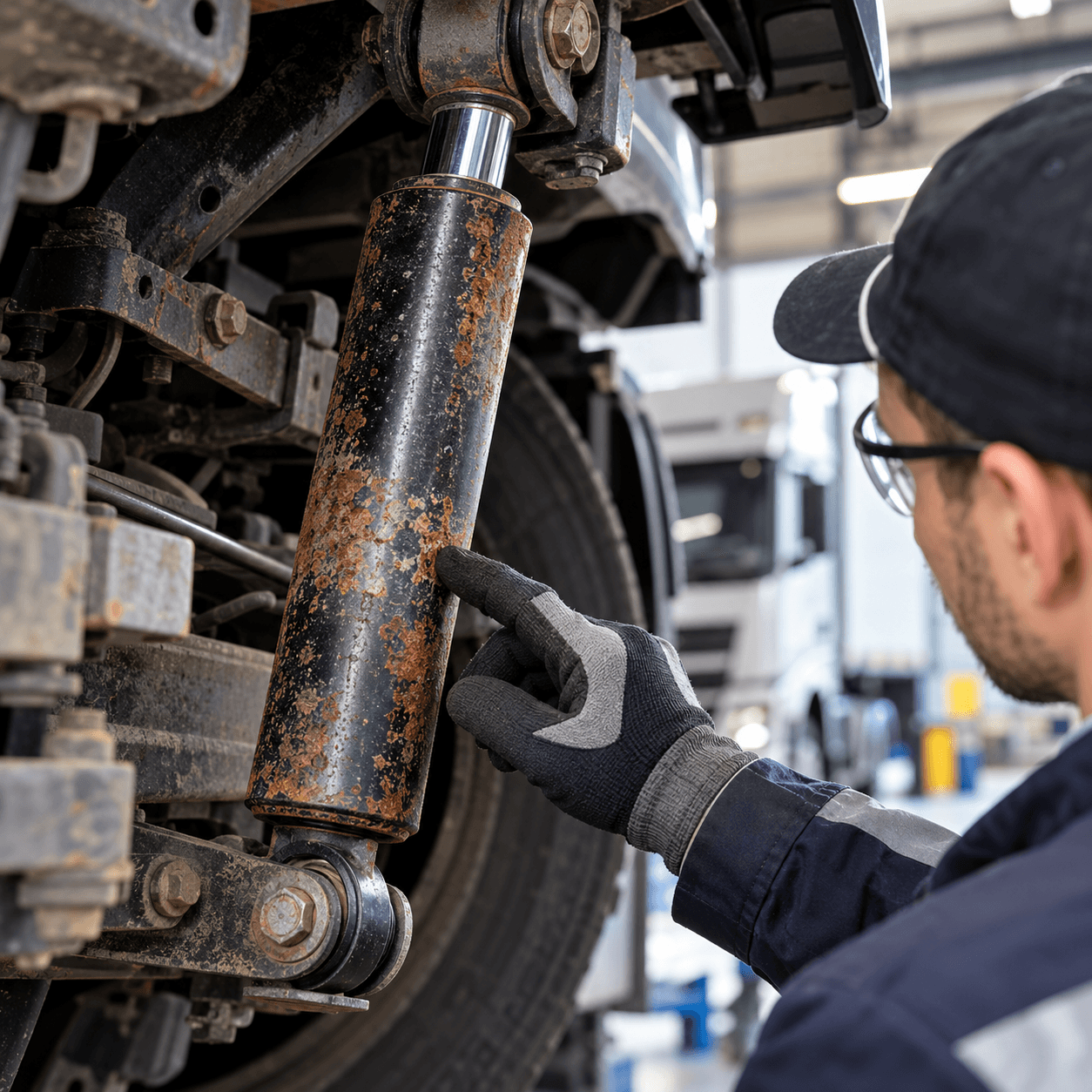
The corrosion of truck shock absorbers requires an assessment that distinguishes surface alteration from deterioration of functional parts. A trace of rust on the external body does not, in itself, allow us to establish whether the component needs to be replaced. The affected area, the extent of the damage and the condition of the entire system matter.
In mid-October, before the winter months, it is useful to include this check in the scheduled checks of industrial vehicles. For fleets and workshops operating in Asti, Piedmont and along the routes in Northern Italy, attention must above all follow the actual conditions of use: routes, environmental exposure and state of the components.
Why check your shock absorbers before winter
Water, dirt and, on treated roads, road salt can contribute to the deterioration of metal surfaces. Any damage to protective coatings deserves attention because it can leave parts of the component exposed.
The autumn check serves to identify situations that require further investigation before the vehicle faces further severe conditions. However, there is no universal frequency valid for every truck: the maintenance program must comply with the manufacturer's instructions and take into account the use of the vehicle.
The position of the shock absorber and the presence of protections also influence which surfaces are accessible during the inspection.
External body: observe coating and surface
On the shock absorber body it is useful to check the condition of the coating, the presence of detachments, oxidized areas or visible damage. The external appearance must be interpreted together with the other conditions of the component.
A slight alteration of the finish and a deterioration that compromises the integrity of the part are not equivalent situations. Photographing the affected area, without hiding it with improvised interventions, can help discussions with the technical staff.
The inspection must not be limited to rust: deformations, impacts and traces of fluid are further elements to be evaluated according to the applicable documentation.
Shock rod: a surface to protect
The stem deserves particular attention because its surface works in contact with the sealing system. Corrosion, scratches or damage in the sliding area can compromise the correct functioning of the seals and encourage leaks.
The check must be carried out without using pliers, abrasives or other tools that could damage the surface. Any protections present must be checked according to the instructions provided for that configuration.
An apparently clean surface does not, in itself, demonstrate the efficiency of the shock absorber: the evaluation must also consider the behavior of the component.
Connections and fixings: evaluate the connection to the vehicle
Corrosion can also affect attachments, brackets and fasteners. These parts connect the shock absorber to the suspension system and must maintain the integrity intended by the application.
During the check, it is necessary to distinguish surface oxidation from deterioration, deformation or damage that requires further investigation. Bushings and surrounding components are also part of the evaluation.
Tightening, replacement of fasteners and interventions on supports must follow specific procedures. Covering a deteriorated area with paint is not the same as verifying its suitability.
What information to collect for a technical audit
To report an anomaly it is useful to prepare:
- shock absorber code;
- vehicle data and configuration;
- mounting position;
- complete photographs and details of the area;
- conditions of employment;
- any noises, leaks or changes observed.
These elements facilitate the comparison, but do not replace the inspection of the vehicle when necessary.
Shock absorbers for industrial vehicles: the Way Assauto reference in Asti
Way Assauto, based in Asti in Piedmont, develops and produces shock absorbers for different applications and supports professionals in identifying references.
If you need to locate a spare part, communicate the code, application and information available. The choice must respect the characteristics required by the vehicle.
Contact Way Assauto: info@wayassauto.com · +39 0141 1788335.
Leave a Reply