

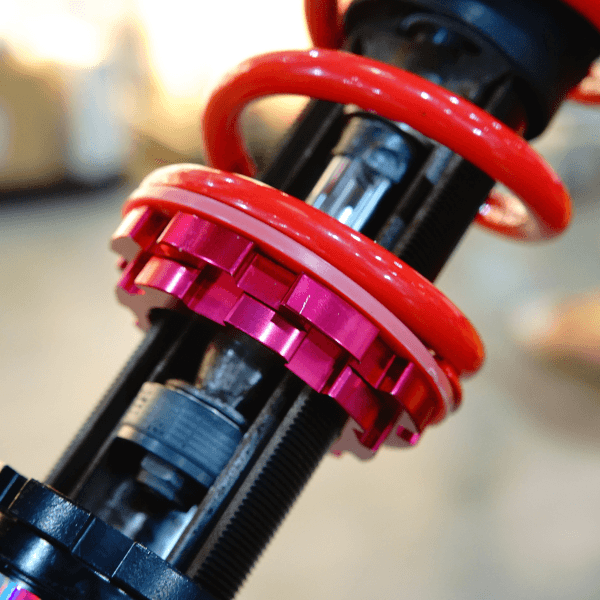
Single-tube and twin-tube shock absorbers: differences, operation and applications
When it comes to vehicle suspension and safety, understand the difference between single-tube and twin-tube shock absorber it is fundamental. Both solutions have the task of controlling the oscillations generated by the springs, keeping the tires in contact with the road and guaranteeing stability, comfort and driving precision.
The different internal structure, however, influences the response of the shock absorber, the ability to dissipate heat and the suitability for various applications, from cars to trucks, up to buses and industrial vehicles.
How a shock absorber works
The shock absorber is a hydraulic component that transforms the energy produced by the oscillations of the suspension into heat, subsequently dispersed into the environment.
When the wheel encounters a pothole or irregularity, the piston moves inside the cylinder. The oil flows through valves and calibrated passages that offer controlled resistance to movement.
This process generates the so-called damping force, essential for limiting bounces, pitching when braking, rolling when cornering and excessive movements of the bodywork or cabin.
The internal configuration can be mainly single-pipe or double-pipe.
What is a monotube shock absorber
L’monotube shock absorber it uses a single cylinder, inside which are the working piston, hydraulic oil and a pressurized gas chamber. A separating piston separates the fluid from the gas, preventing the two elements from coming into direct contact.
This structure allows for good heat dissipation, because the cylinder is directly exposed to the outside air. Additionally, the generally larger diameter of the piston allows for precise control of oil flow and damping response.
Among the main advantages of the monotube shock absorber we find:
- rapid response to stress;
- good performance stability at high temperatures;
- greater thermal dissipation capacity;
- precise control of suspension movements;
- reduction of the risk of oil aeration.
These characteristics make it suitable for applications subjected to high or continuous stress.
What is a twin-tube shock absorber
L’twin-tube shock absorber it is made up of two concentric cylinders: an internal working tube and an external compensation tank.
During compression, some of the oil is transferred from the inner cylinder to the outer cylinder through a base valve. In the extension phase, the fluid returns to the working circuit following calibrated steps.
The double-tube structure allows to obtain a compact and versatile component, capable of offering a good balance between comfort, control and production costs.
The main advantages are:
- high adaptability to different configurations;
- compact dimensions;
- progressive response;
- good ride comfort;
- wide calibration possibility.
For this reason, twin-tube shock absorbers are widely used on cars, trucks, cabs, buses and numerous aftermarket applications.
Difference between single-tube and double-tube shock absorbers
To the main ones difference between single-tube and double-tube shock absorbers concerns the internal configuration.
In the monotube, piston, oil and gas chamber are located in a single cylinder. In the double pipe, however, the fluid works between an internal cylinder and an external tank.
Monotube tends to dissipate heat more quickly and maintain a constant response during heavy use. The double tube generally offers greater design flexibility, compactness and a response also suitable for comfort-oriented applications.
It is therefore not correct to say that one technology is always better than the other. The choice depends on:
- vehicle mass;
- suspension geometry;
- available space;
- type of route;
- cargo transported;
- required level of comfort;
- operating temperatures;
- frequency of stresses.
Applications in industrial vehicles
In the shock absorbers for trucks and industrial vehicles, the configuration must be defined based on the function of the component.
A shock absorber intended for the axle faces different stresses than one installed in the cab or driver's seat. Buses, trailers, special vehicles and railway vehicles also require specific calibrations and characteristics.
When choosing, it's not just the single-tube or double-tube structure that counts. The quality of the materials, the design of the valves, the fluid used, the seals, the surface treatments and the durability tests are also decisive.
Which shock absorber to choose
The choice between single-tube and twin-tube shock absorbers should not be based solely on external appearance or price.
Two apparently similar components can have completely different damping curves, internal pressures and calibrations. For this reason it is essential to check compatibility with the vehicle and respect the specifications required for the application.
Relying on a specialized manufacturer means being able to count on components designed, tested and controlled to offer constant performance over time.
Understand the differences between single-tube and twin-tube shock absorber It therefore helps workshops, spare parts dealers and fleet managers to identify the most suitable solution, improving the stability, comfort and safety of the vehicle.
Leave a Reply