

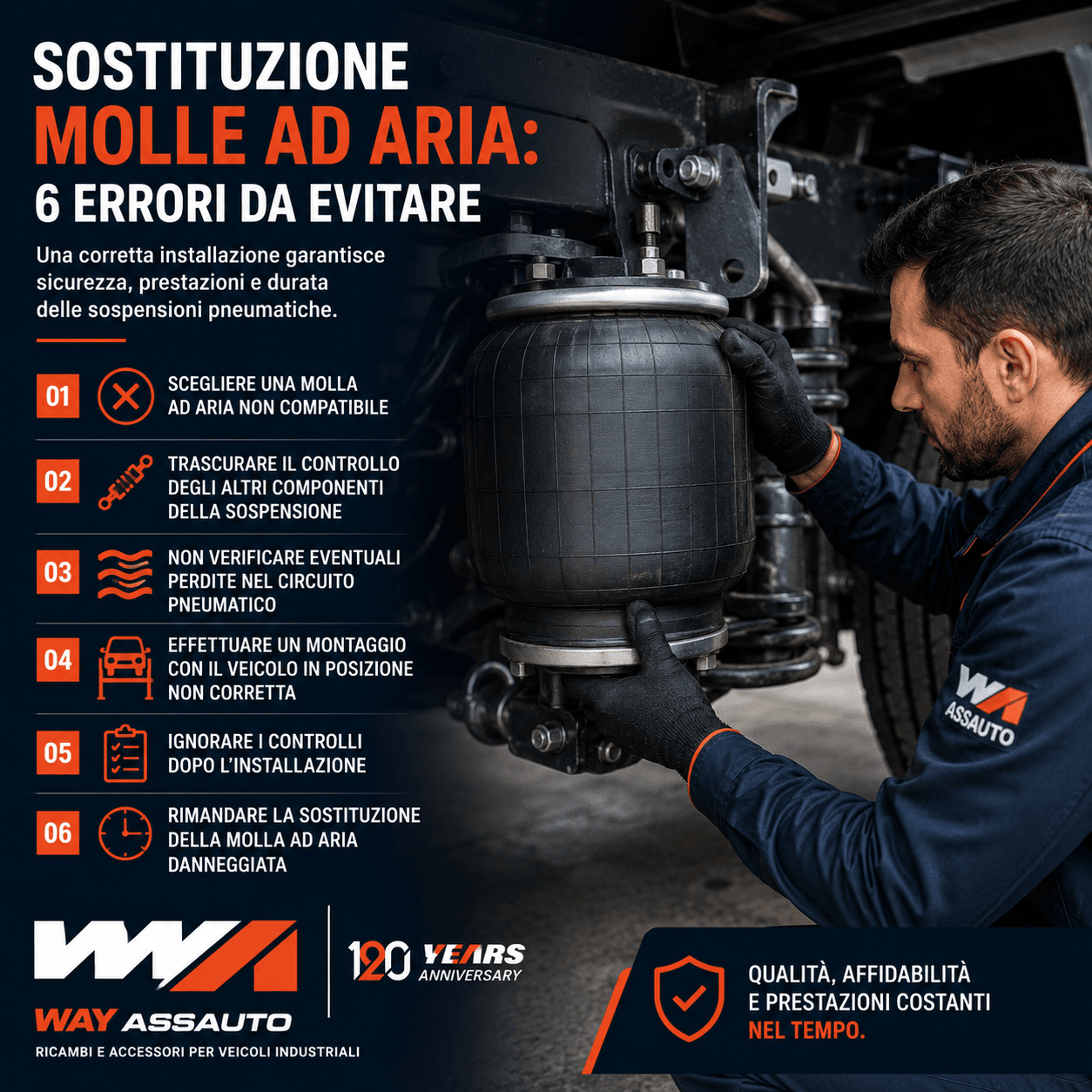
Mistakes to avoid when replacing air springs
The replacement of air springs it is a fundamental intervention to maintain high performance of the pneumatic suspensions of industrial vehicles. However, installing a new component without following the correct procedures can compromise the functioning of the entire system, reduce the life of the replacement and increase the risk of premature failures.
Knowing the most common errors allows workshops, maintenance workers and fleets to preserve the reliability of the vehicle, limit maintenance costs and guarantee safer driving conditions.
Choose an incompatible air spring
One of the most frequent mistakes is installing a air spring not perfectly compatible with the vehicle.
Dimensions, construction features and technical specifications must comply with the manufacturer's specifications. An unsuitable component can alter the correct functioning of the pneumatic suspension, affecting the stability of the vehicle and driving comfort.
Relying on quality spare parts and always checking compatibility represents the first step for a properly carried out replacement.
Neglect checking other suspension components
Replacing only the air spring without checking the rest of the system is a mistake that can significantly reduce the life of the new spare part.
During the operation it is advisable to also check:
- shock absorbers;
- pneumatic fittings;
- air pipes;
- fixing supports;
- brackets and anchor points.
A worn component can in fact compromise the correct functioning of the new air spring, causing abnormal wear over time.
Do not check for possible leaks in the pneumatic circuit
Before completing the replacement it is important to make sure that the pneumatic system is perfectly efficient.
Small air leaks, incorrectly tightened fittings or deteriorated piping can prevent optimal pressure from being maintained, reducing the effectiveness of the suspension and increasing stress on the new component.
Accurate control of the entire circuit allows you to prevent subsequent anomalies and repeated interventions.
Carry out assembly with the vehicle in the incorrect position
The installation phase requires particular attention.
Working with the vehicle not correctly positioned or without respecting the established procedures can generate anomalous tensions on the air spring right from the first use.
Following the technical instructions and using the appropriate tools allows you to guarantee precise assembly and uniform distribution of loads on the suspension.
Checks to be done after replacing air springs
Once the replacement is completed, the work cannot be considered completed without a final check.
It is good practice to check:
- the correct alignment of the vehicle;
- the absence of air leaks;
- the behavior of the suspension during operation;
- uniformity of height from the ground;
- any abnormal noises.
These checks allow any anomalies to be identified promptly before they can turn into more serious problems.
When putting off replacing air springs is risky
Continuing to use a deteriorated air spring in the hope of postponing its replacement can have far more costly consequences.
An inefficient suspension increases stress on shock absorbers, tires and other vehicle components, negatively impacting stability, comfort and safety while driving.
Intervening at the right time means limiting the risk of extensive breakdowns and reducing vehicle downtime.
Correct installation is important, but equally so is choosing components designed to ensure reliability over time.
Air springs intended for industrial vehicles must ensure resistance to continuous stress, stability even in the most demanding conditions of use and constant performance over time.
Leave a Reply